


Every June, Emilio Savone and his business partners start to worry that something is wrong with their comedy clubs.
Sales slow down. The temptation is to cut costs or abandon whatever new project they have taken on. Then September arrives and the rooms fill again.
They have been through this cycle enough times that they now put a recurring reminder in the calendar: don’t freak out.
It is a small detail, but it explains a lot about how Savone looks at comedy careers.
After years of running clubs, he can tell the difference between a bad month and a broken business. Comics rarely have that luxury. A soft weekend feels personal. A run of weak ticket sales can make every decision look wrong.
Savone thinks around 90 percent of working comics are trying to treat their career like a business. Most, he says, do not realise they are failing at it.
That is not because they are lazy. The job has changed faster than the culture around it.
A comedian once needed to get funny, get noticed and find representation. Now the comic is also expected to understand distribution, customer data and when to stay home.
Emails and Phone Numbers Are King
Start with the website. Savone is still surprised by the number of successful comics who do not have one. Their tour dates live on Instagram and their audience lives inside platforms they cannot control. That arrangement feels fine until they need to sell tickets in a specific city.
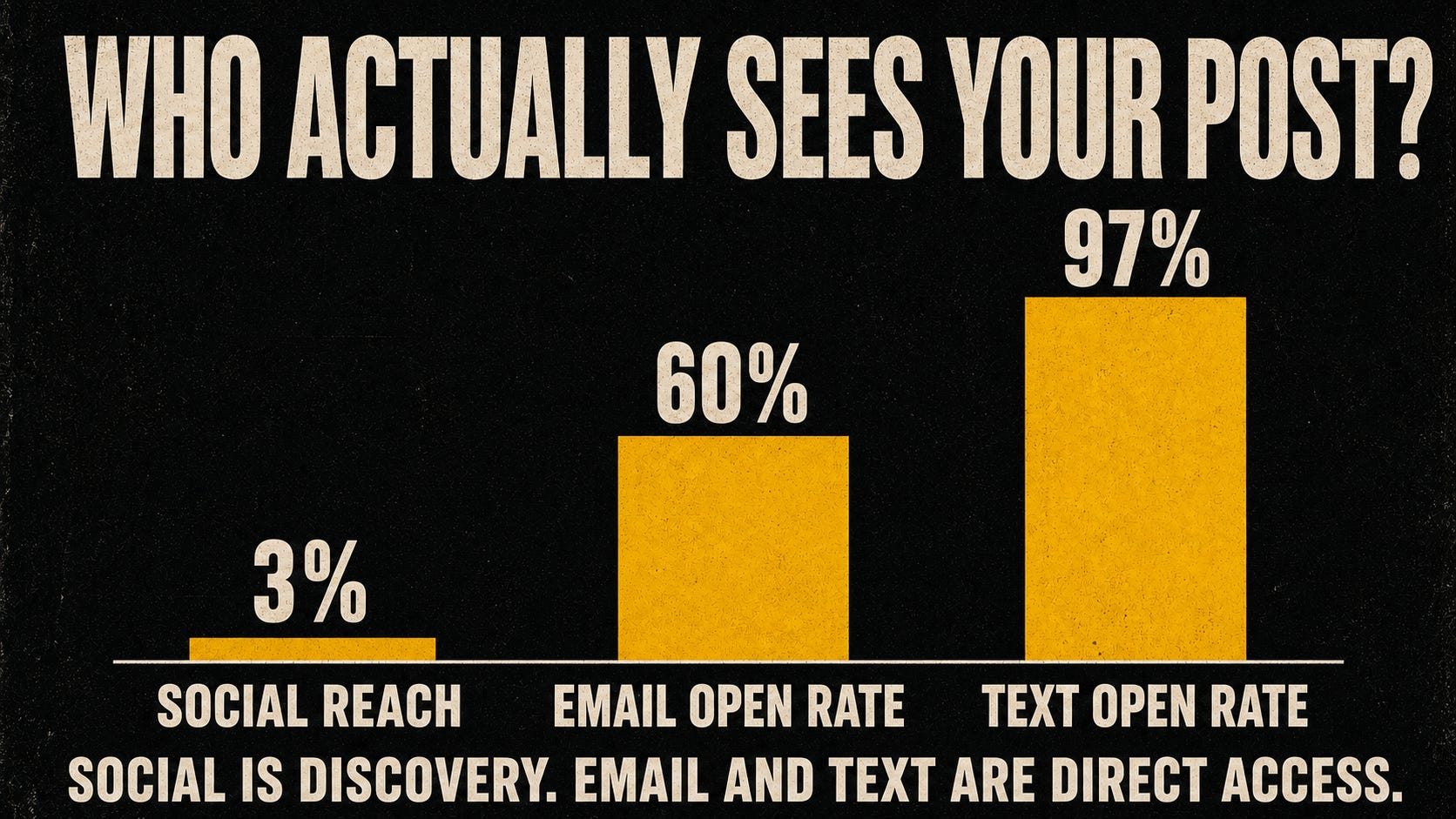
During our conversation, I mentioned a creator I manage whose posts reach about 3 percent of her social following. Her emails reach roughly 60 percent of her list. Her text messages have an open rate close to 97 percent.
The point is not to abandon social media. Social is where people discover you.
A website and mailing list are what actually build your business.
Louis C.K. found out what a list like that was worth by accident.
After he emailed fans a political rant, Stephen Colbert asked him about the reaction. Louis admitted he had not expected it to travel so far. “I have a little email list,” he said. Colbert reminded him: “You have hundreds of thousands of people on your email list.” Louis replied: “Yes, but that’s not that many.”
By the next morning, that email had put his face on the front page of the Daily News.
Louis thought the list was small. He had confused size with power.
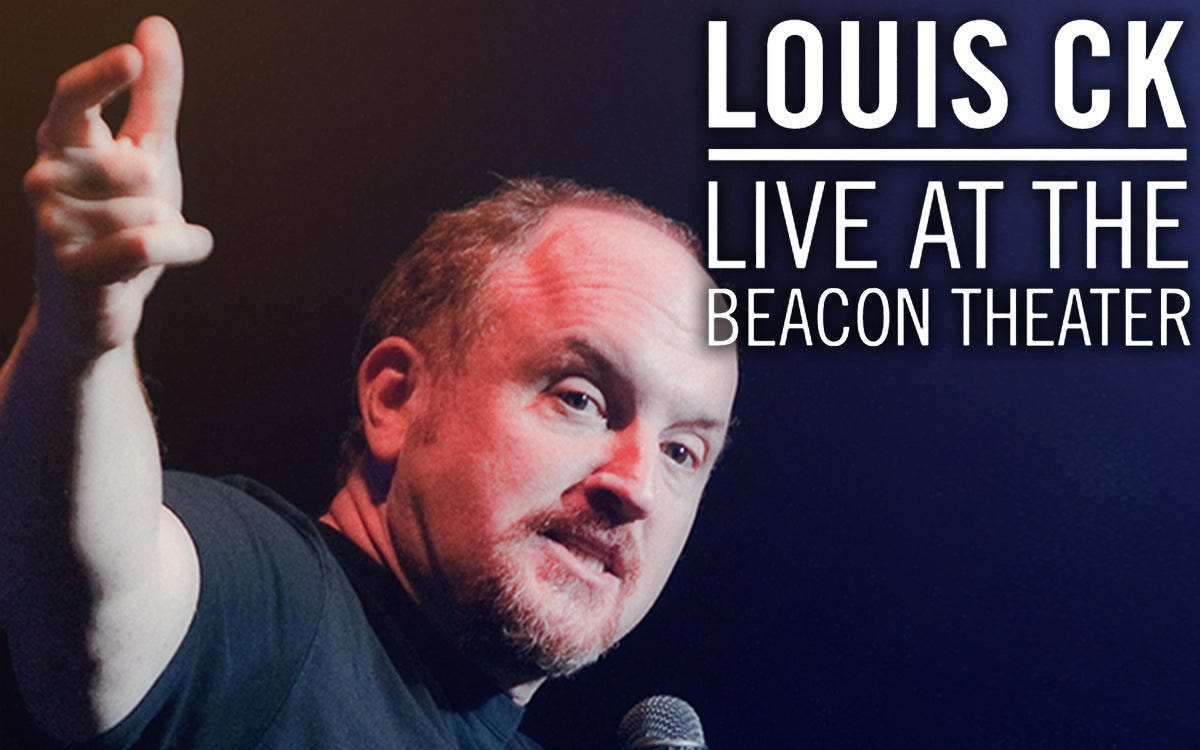
Years earlier, he had already proved the commercial version of the same point. He financed Live at the Beacon Theater himself, sold the unrestricted download from his website for $5 and asked buyers not to pirate it.
Twelve days after launch, sales passed $1 million. On Jimmy Fallon, Louis jokes that it was “a $5 impulse that 220,000 people had.”
Put Up Numbers The Streamers Can’t Ignore
Joe DeRosa’s special was passed on by the streamers, but he made them come crawling back.
After all the steamers passed on his brilliant special, Joe released it on a fresh YouTube channel with no established subscriber base. The special approached a million views.
The streamer came back with their tails between their legs, and offered him a deal.
Emilio gave the quality of the special most of the credit. I thought the numbers forced the platform to reconsider. Both can be true.
The work gave people a reason to watch; the audience removed the excuse to ignore it.
YouTube did not eliminate the gatekeeper. It allowed Joe to return to the same gate carrying undeniable evidence.
YouTube allowed Joe DeRosa to become undeniable.
However some comics can shoot for evidence and miss.
Touring is how most comics pay their bills, so the instinct is to keep adding dates. Savone sometimes gives the opposite advice. A half-empty room leaves a record with venues and promoters. If a market is soft, another weekend on sale can weaken the story a comic is trying to build.
He described one comic who stepped away from touring to focus on a documentary. When it was time to return, promoters wanted to know where he had been. He had a new project and a reason for audiences to pay attention again. The absence created curiosity. Another routine run might have created fatigue.
The Job of a Manager
This is also why Savone sees a manager as something closer to a business partner. An agent can find gigs and route a tour. A manager should be thinking about the conditions that make those gigs worth booking: the website, the channel, the release plan and whether the comic should be on the road at all.
Much of that work produces no immediate commission. If it succeeds, the eventual offers can look as though they arrived by themselves. They did not. Somebody spent years making the artist easier to find and harder to dismiss.
A comic still has to be funny. There is no marketing funnel for bad jokes. But the career is built after the audience leaves the room.
Can they find you again?
Can you reach them without asking a platform for permission?
Have you made something that travels when you cannot?
The room decides whether you are funny. What you build around the room decides whether anyone is there next time.


OFFSTAGE
Offstage is where I share useful things for people in music and comedy that have nothing to do with music or comedy.
I’ve bought and tested more than 25 carry on bags over the past four years. Like most of us, I travel a lot.
A good carry-on makes airport security and accessing your tech on the plane easy. A bad one makes both incredibly annoying.
Today, I’m sharing the Commuter Backpack from LTTStore. It’s the best travel backpack I’ve ever used.
What I like:
It feels expensive and properly built.
The layout is perfect for quickly accessing a laptop, iPad, headphones, gaming device and chargers.
It has dedicated pockets for your passport, bottles, cash and all the other small things that usually disappear inside a bag.
It made getting through airport security and accessing my tech on the plane an absolute breeze.
It’s comfortable, carries well and looks good.
None of this sounds particularly revolutionary. I don’t know why it took so long for someone to get all of it right in one bag, but somehow Linus did.
Highly recommended. This is not sponsored.
You’re all welcome.


