Between 2017 and 2024, I built and sold the company that launched Rolling Stone and Variety Australia. We built The Rolling Stone Awards and The Variety CMO Dinner among many other events and IP.
At its peak, the media business reached half the Australian population each month.

I interview Gary Vee at the Variety CMO Dinner
The publishing industry was falling apart around us, but we grew. From the outside, the story looked great. Recognisable mastheads, large audiences, packed events and a successful exit.
All of that was real, but at the time of sale, the business was making less than 4% margin.
The problem was not the journalism or the events. It was the sheer amount of work required to keep everything moving.
Campaigns had to be run. Traffic had to be managed. Stories had to be edited and distributed. Social channels needed to be fed. Client campaigns needed to be flighted. Every event needed a project plan. Every new brief needed a deck and a pitch. The CRM had to stay current.
Then there were another dozen functions sitting around those ones. Every task made sense on its own. Together, they consumed almost everything the business earned.
Good people can hide a broken system
It would be easy to tell this story as if the team was inefficient. They were not.
The team was overextended and working long hours. Nobody was coasting. They were good people doing necessary work inside a model that demanded too much human effort.
That distinction matters.
When somebody is underperforming, you can address the performance. When the work itself is badly designed, asking people to try harder only hides the problem for longer.
Revenue walked in the front door, and labour ate it before it reached the bottom line.
We spent a lot of time trying to make the work more efficient. We improved processes, bought software and automated whatever the technology allowed us to automate.
The limitation was not effort or awareness. The available tools could make individual tasks faster, but they could not remove whole layers of coordination.
We could improve a workflow around the edges. We could not make it ten times more efficient.
Music and comedy companies have the same problem
An artist manager wants to spend time building a career, but the day disappears into chasing assets, following up approvals, updating schedules, project management and keeping five different stakeholders informed.
A label team has similar headaches, and a promoter wants to sell tickets and deliver the show, but advancing, event management, settlements, changing schedules and repeated status updates create another business underneath the event.
None of those tasks is pointless. That is why the problem is hard to solve. You cannot simply stop doing the work.
But you can ask whether a person should still be moving every piece of information by hand.
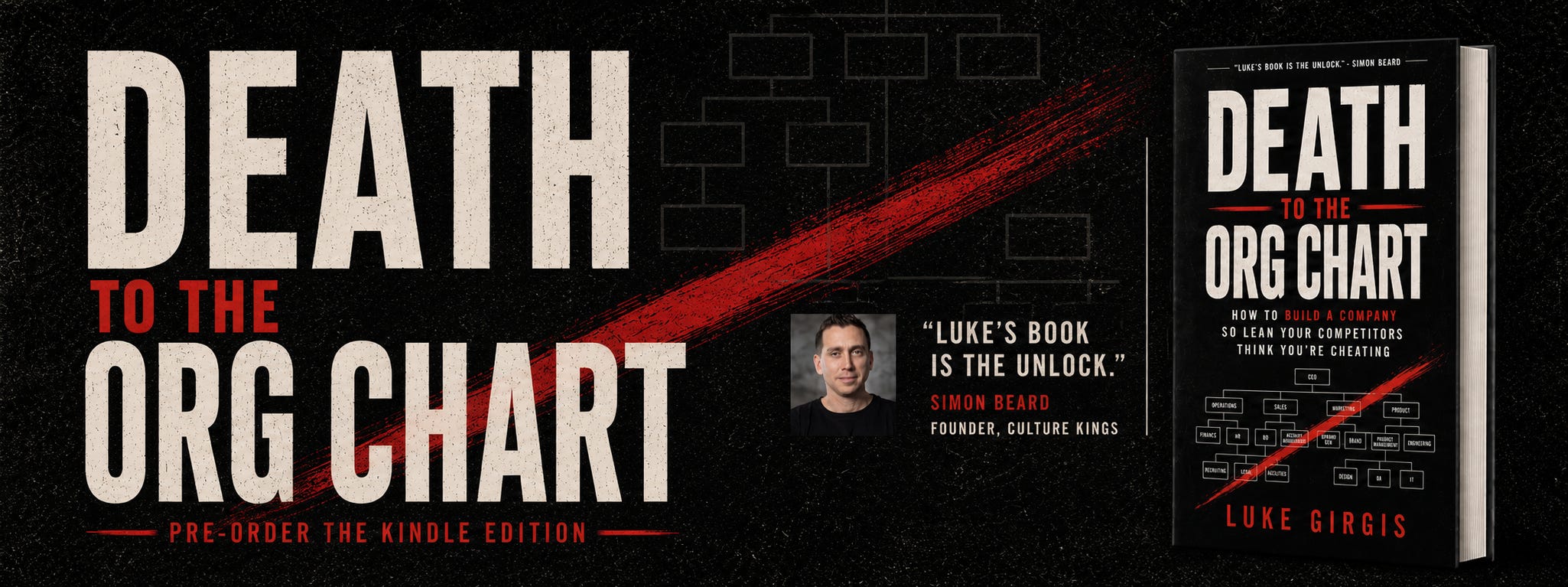
This is an operating problem. It is the problem that led me to write Death to the Org Chart.
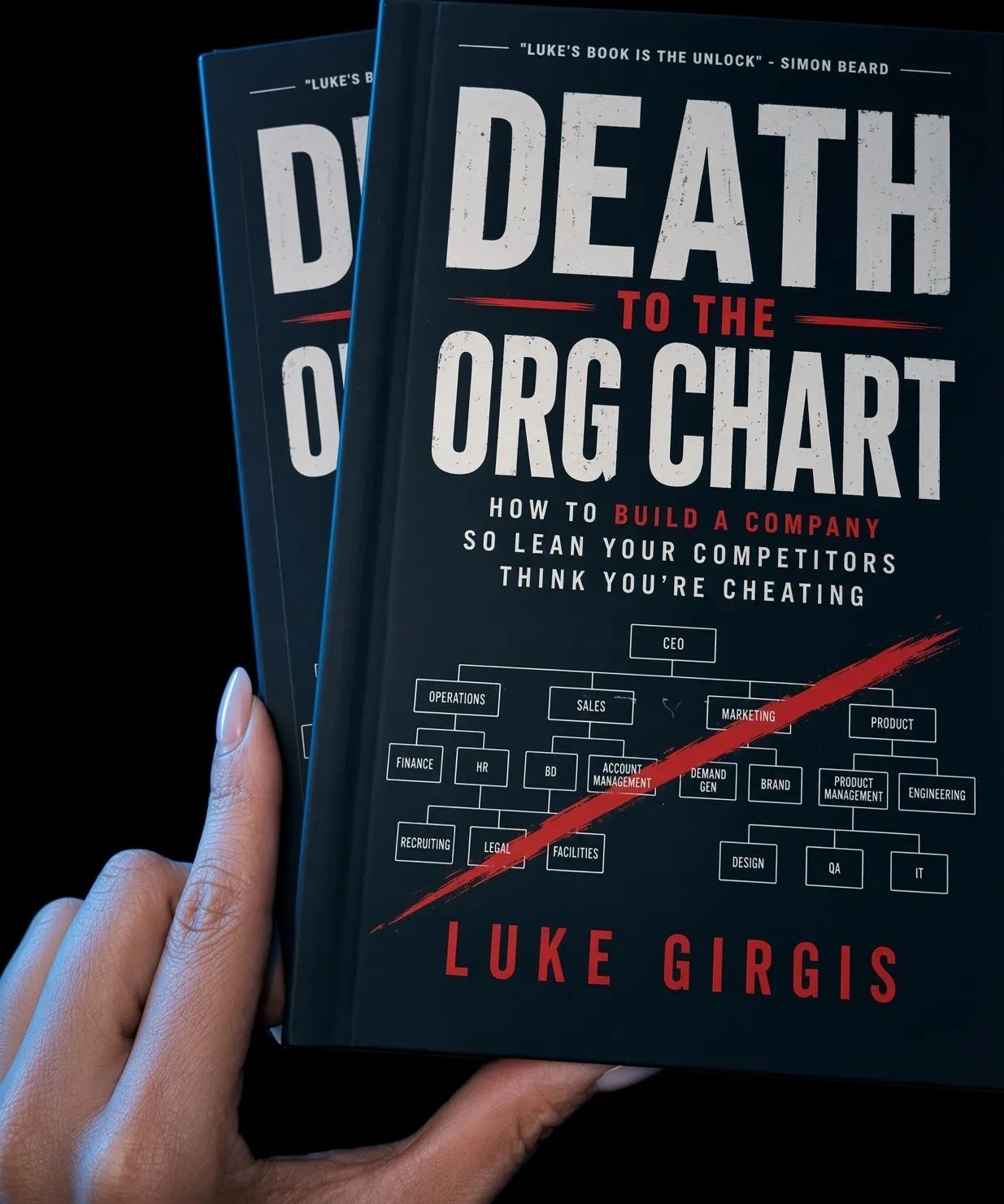
Order my book here
Why I wrote the book
After selling my business, I’ve spent most of my time inside startups and small businesses, applying the lessons I took from my media company.
I took one business from losing A$400,000 a month to breakeven within two years. My artist management company has removed around 80% of its admin work and I’ve helped several companies increase their marketing output without adding headcount.
The tech to do this is cheap and getting cheaper. The hard part is knowing which hours of somebody’s week are worth removing or automating.
So I wrote down the method I use, and have saved millions using.
Death to the Org Chart takes about 90 minutes to read. You don’t need technical knowledge. You just need to know how your business actually runs.
If you’re about to solve being busy by hiring someone, read this first. Growing your org chart in lockstep with your revenue will be the death of you.
What this looks like in artist management
For the past year, I have been building Artist.Build as an internal tool for my artist management business.
It connects the pieces of a brand deal from the first email through the contract, delivery, invoicing, artist payment and manager commission.
It is one example of the book’s argument in practice. The manager keeps the negotiation, artist judgement and relationship. The system carries more of the repeatable administration around them.
Artist.Build is still an internal tool for my firm, but I plan to invite a small group of management friends to test it soon. If that sounds like you, put your name down at artist.build.
Rolling Stone Australia and Variety Australia taught me how a successful company can still be trapped inside an expensive operating model. Death to the Org Chart explains the new way companies should run.
If you recognise the problem from your corner of music or comedy, I hope you find the book helpful to your business.